
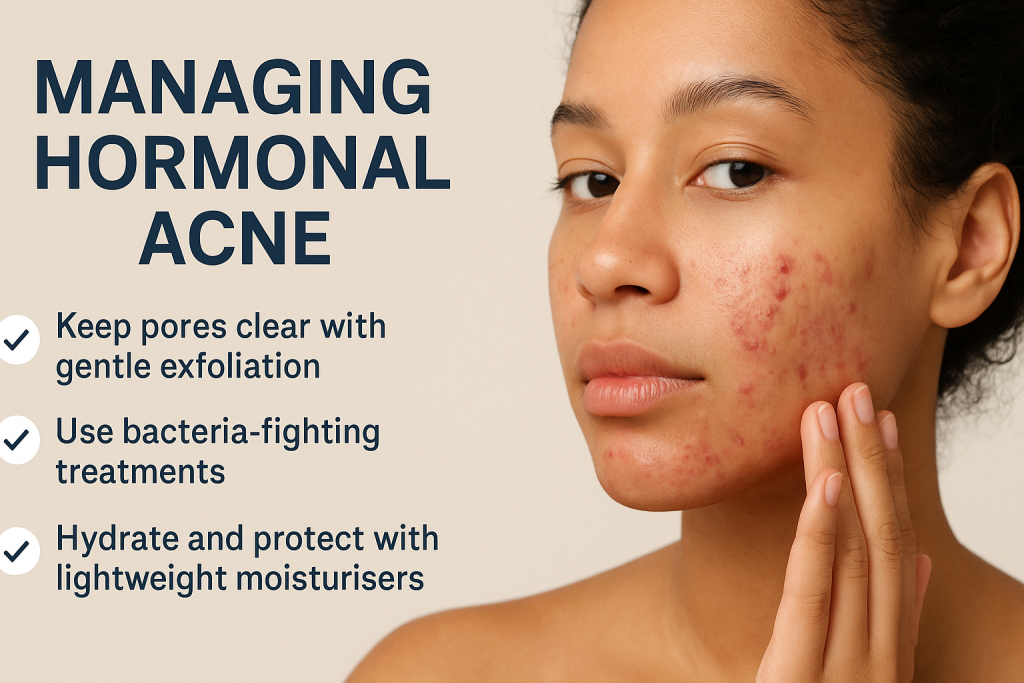
Hormones significantly impact your skin — especially if you’re dealing with acne and oily skin. Fluctuations in hormone levels, such as during puberty, menstruation, or pregnancy, can lead to an increase in oil production and clogged pores, making acne more prevalent. These hormonal changes can trigger the secretion of sebum, the oily substance that can exacerbate skin issues. Furthermore, balancing hormones through diet, exercise, and proper skincare can be essential in maintaining clear and healthy skin. By understanding the connection between hormones and skin health, individuals can take proactive steps to manage their skin concerns more effectively.
Here’s how it works:
Hormones and Sebum Production
- Androgens (male hormones found in both men and women) stimulate sebaceous glands to produce more sebum, an oily substance that plays a crucial role in keeping the skin moisturised. This increase in sebum production can lead to various skin conditions, such as acne, which is often exacerbated by hormonal fluctuations during puberty or other life stages.
- This extra oil combines with dead skin cells and clogs pores, leading to various skin issues such as acne breakouts and inflammation that can affect one’s overall complexion and skin health.
- Hormonal fluctuations during puberty, menstrual cycles, pregnancy, and stress often trigger acne flare-ups. This leads to increased oil production in the skin, which can clog pores and promote the growth of acne-causing bacteria.
Managing Hormonal Acne
- Keep pores clear with gentle exfoliation (like the fruit acids in Acne.org.za Cleanse).
- Use bacteria-fighting treatments (Acne.org.za Treat) to reduce breakouts.
- Hydrate and protect with lightweight moisturisers (Acne.org.za Hydrate) and SPF (Acne.org.za Sun Protect).
Important:
If you have severe hormonal acne (like cystic acne), it’s a good idea to consult a healthcare provider alongside skincare management.
Related Reading:
👉 Top 5 Mistakes When Treating Oily, Acne-Prone Skin
👉 Best Ingredients for Oily Acne-Prone Skin